
In Translation: How Paris Couture Week Details Quietly Echo in St Andrews
From Chanel pastels to Schiaparelli wings, the visual language of Paris couture finds unexpected reflections along the coast of KY16. After all, Paris sets the tone. St Andrews translates it.
Dear reader, the idea arrived somewhere between my first cappuccino of the morning and the torrential weather I instantly regretted confronting in heeled suede boots. I was walking, slightly hurried, toward my 10 a.m. tutorial, half-jokingly wishing for a sudden mirage of Dior haute couture to appear in the middle of an otherwise gloomy weekday. Then, looking around more carefully, I realised the wish was unnecessary. Haute couture, if one knows how to look, is already everywhere. Before you assume I have completely lost perspective, please allow me to explain.
Fashion rarely travels in dramatic leaps. It moves quietly, through palettes, textures, and small visual cues that reshape how we dress long before anyone declares a “trend.” The recent wave of creative director debuts across the major Paris houses has only heightened this sense of anticipation. Couture, after all, is where the fashion conversation is spoken in its most concentrated form, even if its influence eventually arrives disguised as something far more casual in prêt-à-porter collections. The runway presents the fantasy; the street writes the translation.
Haute couture, the term itself conjuring images of hushed salons, impossibly precise fittings, and the polished façades of Place Vendôme, represents perhaps the highest level of craftsmanship in fashion, a category so exclusive it is protected by French law. Traditionally associated with spectacle, rarity, and a certain distance from everyday life, couture appears, at first glance, worlds away from the daily rhythms of St Andrews. And yet influence has never been particularly obedient to geography. What begins in the ateliers surrounding Place Vendôme rarely stays there for long. It travels quietly, transforming along the way, until it reappears far from Paris addresses, not as sweeping gowns, but as silhouettes, textures, and subtle styling decisions visible even on the walk through KY16.
Paris establishes the rhythm of this process each season. St Andrews, like every fashion-aware environment, absorbs it gradually, translating runway signals into everyday dressing over time. Because the Spring 2026 couture collections are only just beginning to circulate visually through editorial and retail channels, the most useful way to understand their local relevance is not through immediate street observation but through directional reading. Less “what is everyone wearing right now,” and more what will suddenly feel right six months from now. Three motifs emerging from the Paris couture shows appear particularly likely to shape the coming aesthetic cycle: lightened structure, poetic natural symbolism, and expressive embellishment.
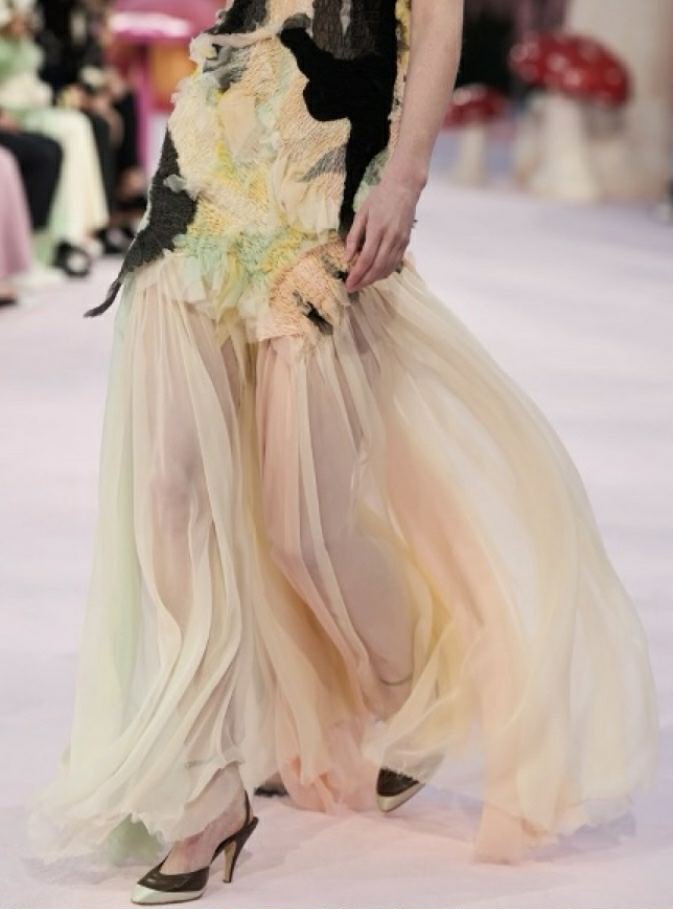
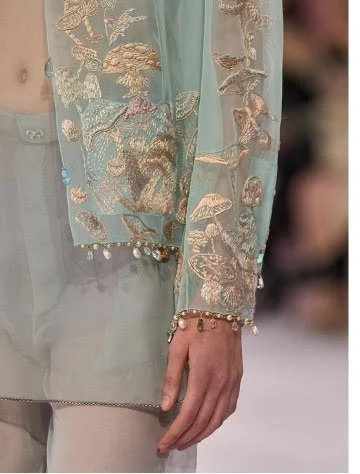
At Chanel, Matthieu Blazy’s couture debut explored the idea of couture made relatable without sacrificing craft. Transparent skirt suits in blush mousseline, delicate embroideries featuring birds and forest-inspired motifs, and garments engineered to feel as light and wearable as knitwear suggested a shift toward couture that feels softer, more atmospheric, and quietly romantic.
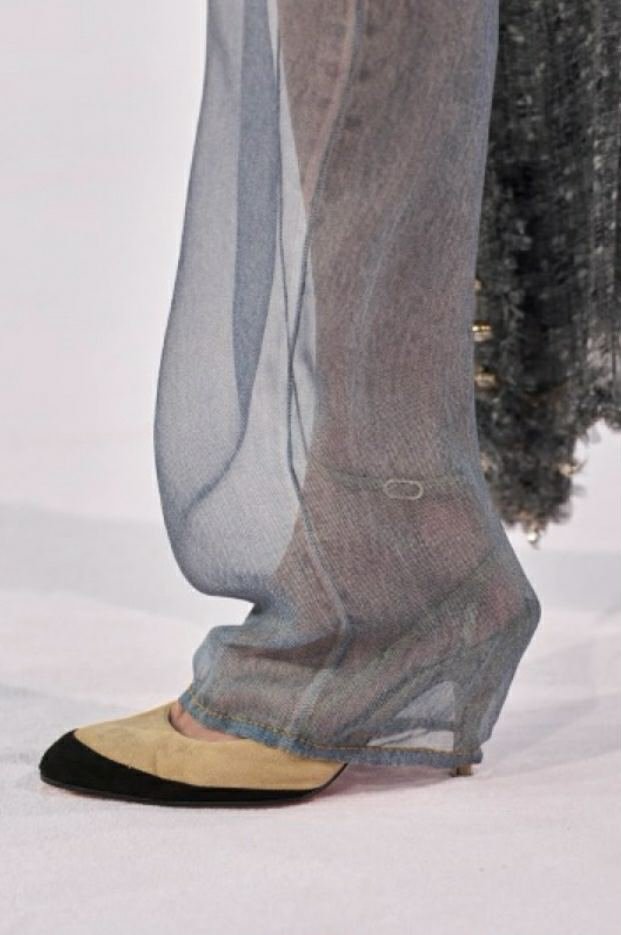
Expect these visual cues to filter gradually into ready-to-wear through lighter tweeds, translucent layering, and softly plissé skirts that move easily between formal and everyday dressing. The colour palette, reminiscent of North Sea reflections, felt perfectly in sync with coastal life, making the translation to St Andrews almost instinctive.
At Dior, Jonathan Anderson’s couture debut balanced heritage reverence with experimentation, introducing unexpected material approaches such as couture knit construction and high-low styling combinations that paired intricately embroidered evening skirts with minimal ribbed tops. The effect suggested a future couture language where structure appears lighter, more flexible, and less rigidly ceremonial.
It is the styling logic that quietly legitimises wearing something very refined with something almost suspiciously simple, the kind of pairing that suddenly makes your most serious skirt feel appropriate for a Tuesday rather than a gala. Silhouettes moving gently from tailored lines into subtly évasé forms reinforced this sense of fluidity.
Schiaparelli, under Daniel Roseberry, presented perhaps the most theatrical vision of the season, emphasising expressive animal-inspired forms, sculptural wings, feathered constructions, and dramatic silhouettes that treated the body almost as a stage for symbolic transformation.
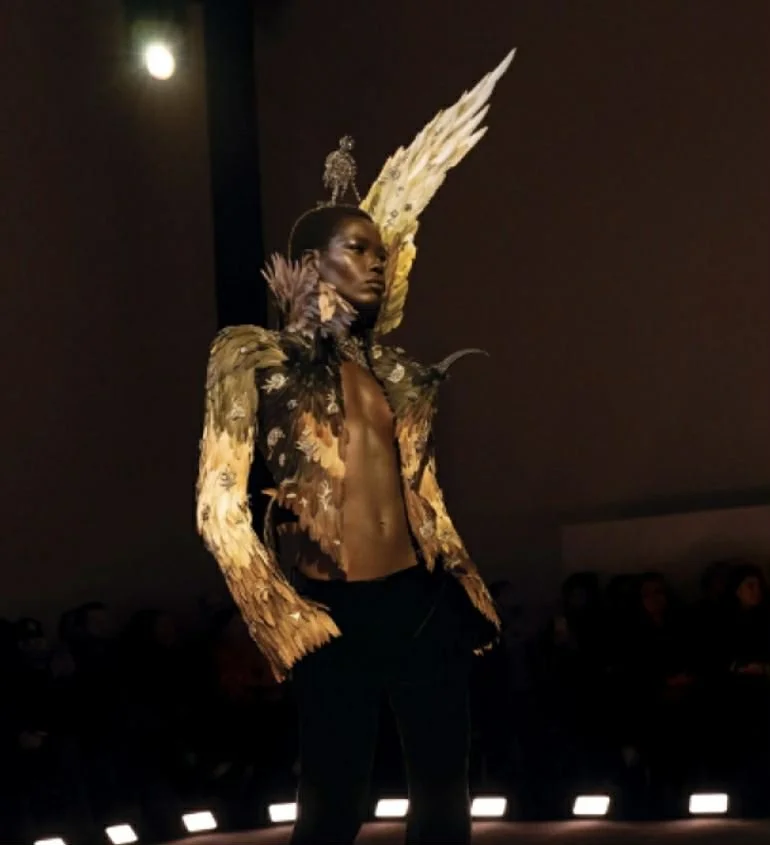
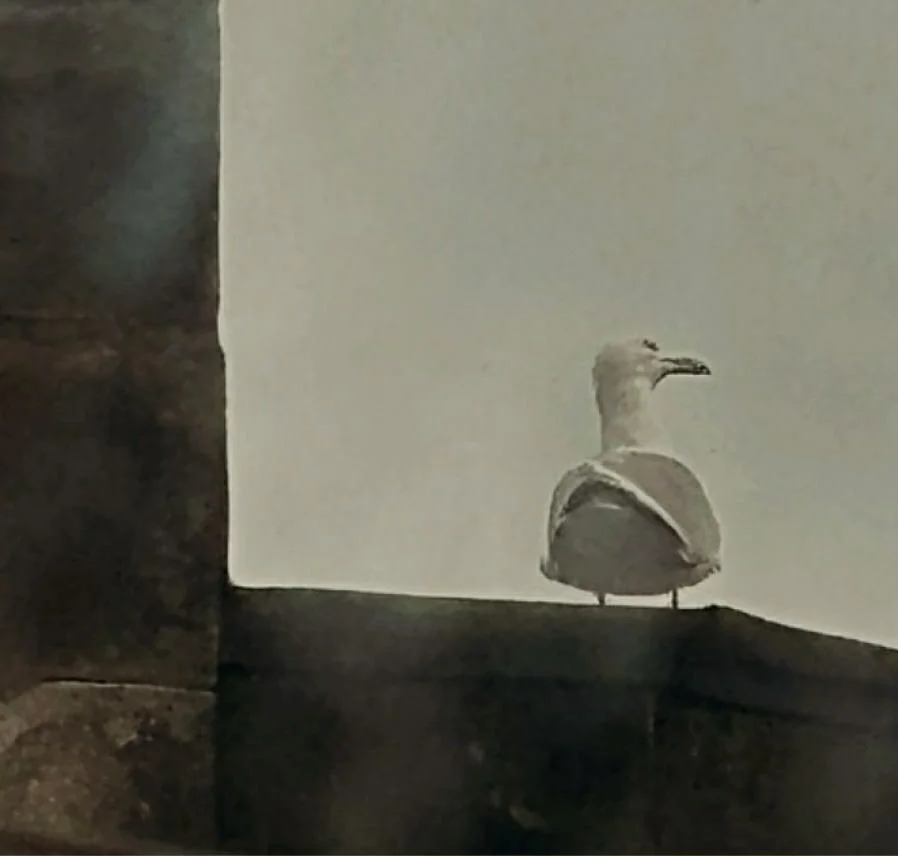
Yet couture theatrics have a well-known habit of shrinking beautifully over time. Today’s sculptural wing becomes tomorrow’s statement earring. Today’s surreal feathered construction becomes next season’s textured accessory. In a coastal town like St Andrews, where birds already dominate the skyline with far more confidence than most of us walking to lectures, the dialogue between couture symbolism and everyday life feels unexpectedly natural.
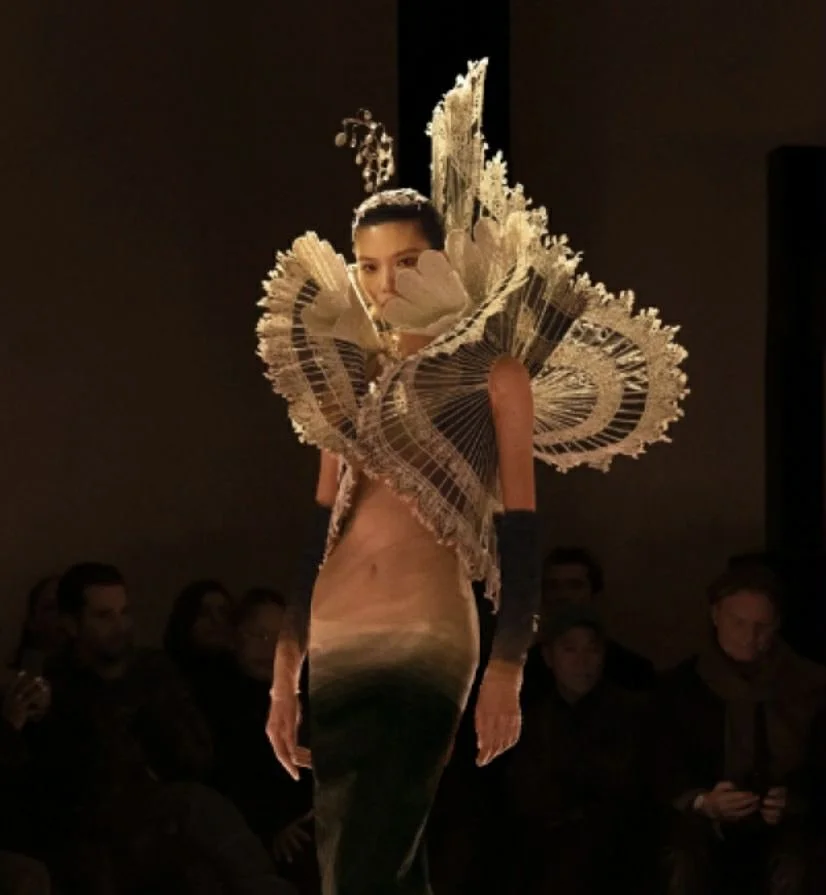
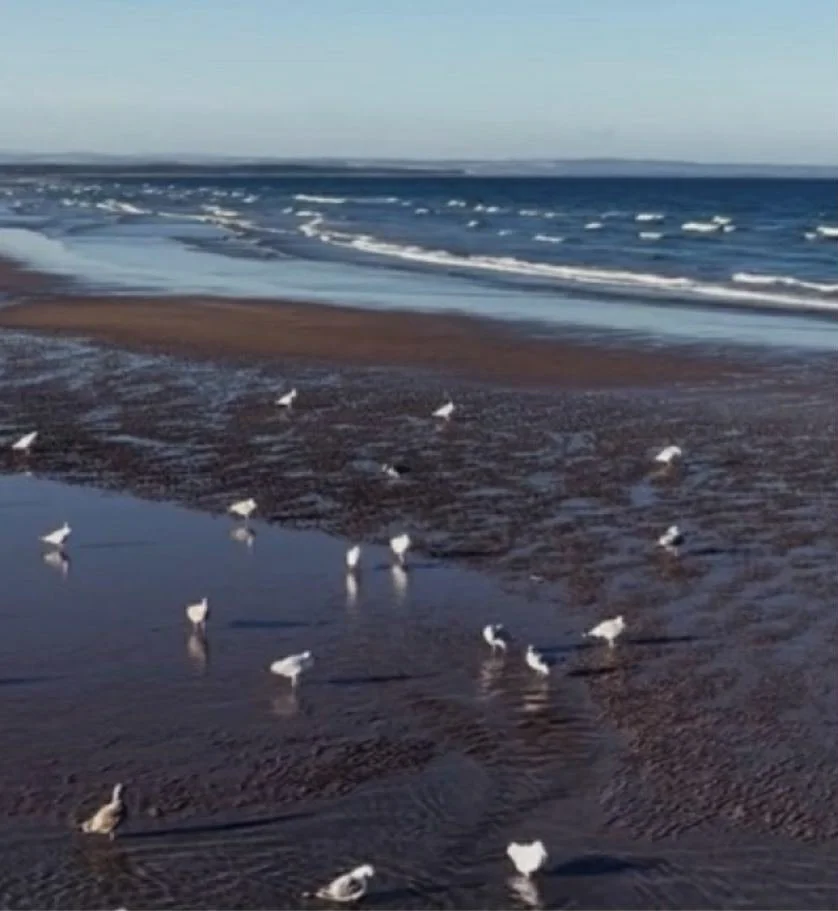
Taken together, these collections suggest that the coming fashion cycle will be defined less by singular silhouettes and more by an atmospheric shift: lighter construction, poetic symbolism drawn from the natural world, and expressive details translated into wearable forms. As these ideas move outward from couture into prêt-à-porter collections and retail interpretation, their eventual appearance on streets such as North Street or Market Street will likely feel intuitive rather than directional, the quiet result of couture’s famously patient diffusion process. Couture rarely announces its arrival. One simply wakes up one morning and realises that everyone, quite coincidentally, seems to be dressing in the same mood.
Fashion influences rarely arrive with announcement, they settle slowly, adjusting what feels elegant, modern, or instinctively right. In a way, Paris introduces the vocabulary and local style decides how fluently it will be spoken.
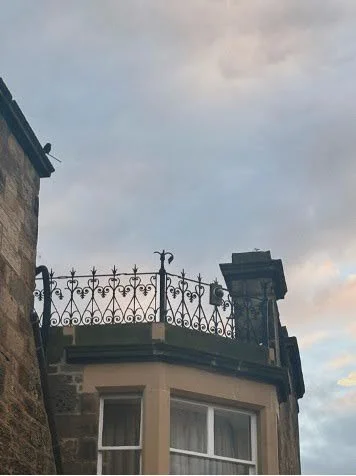
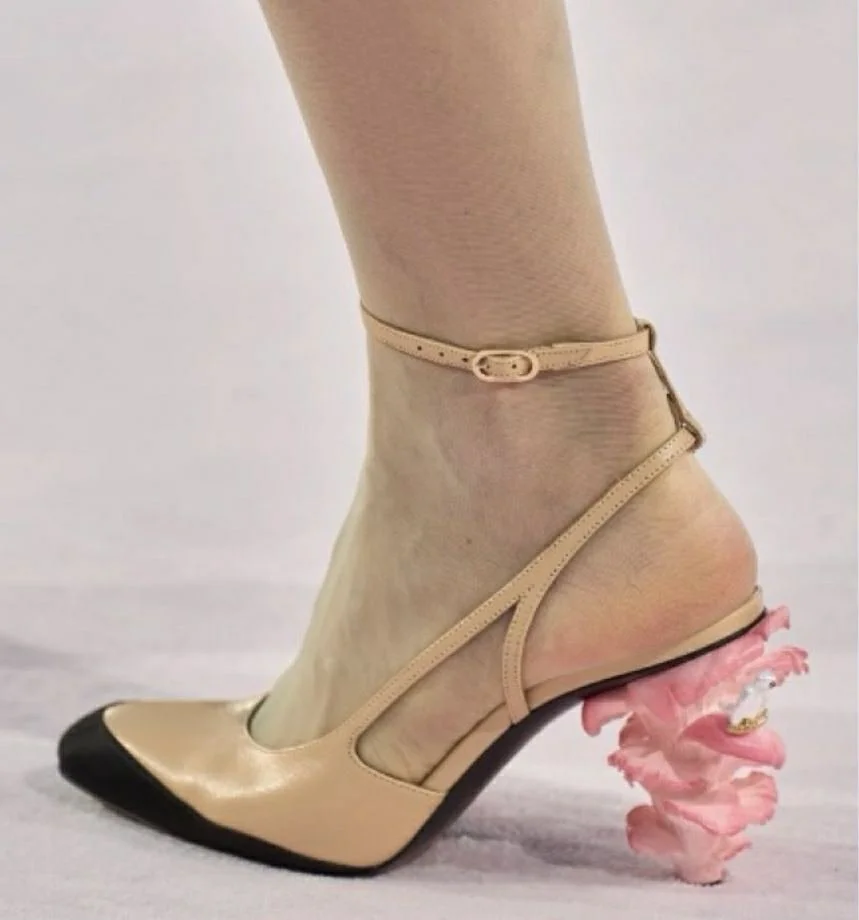
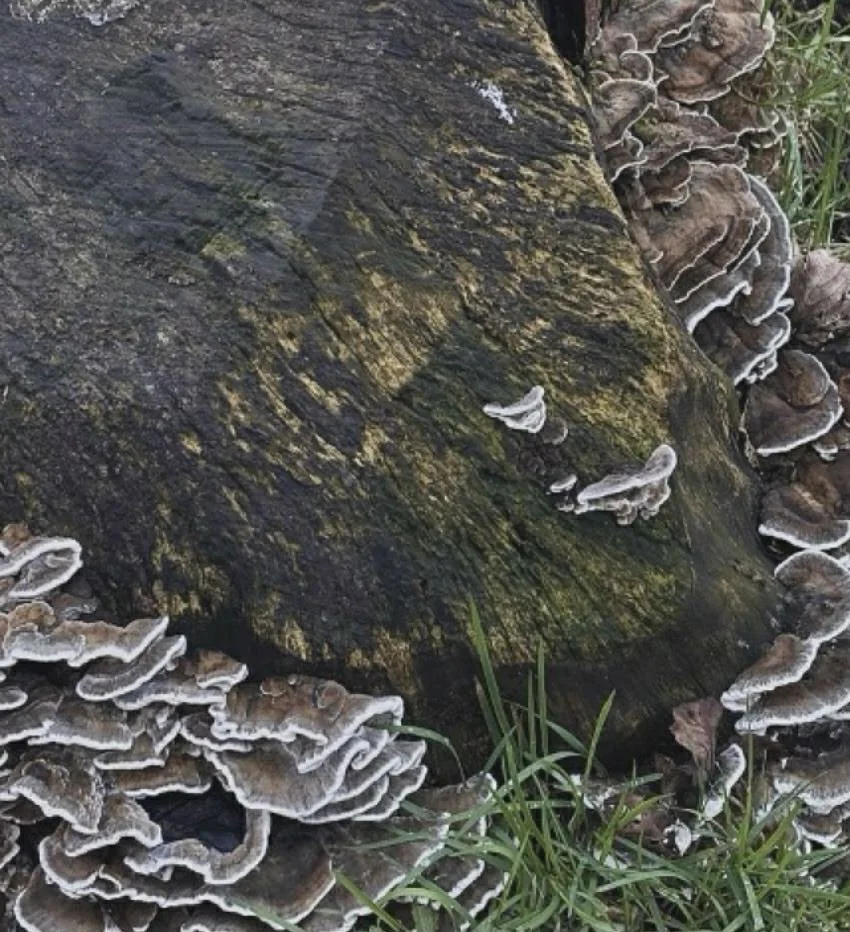
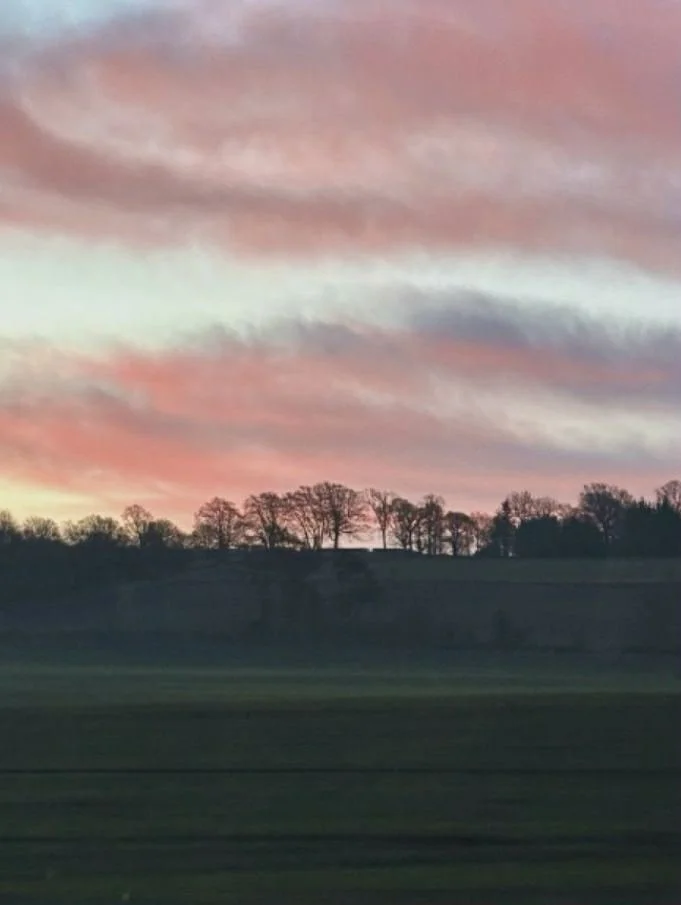
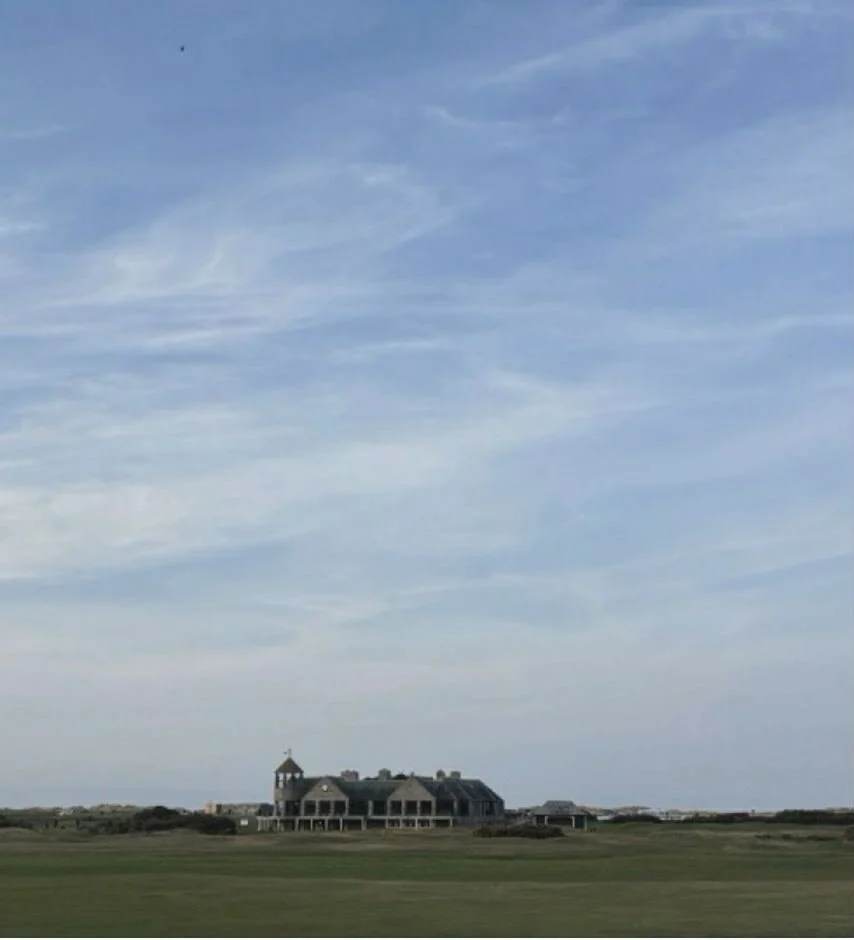
The accompanying editorial photography explores couture through visual echoes rather than direct imitation. A Chanel blue mousseline embroidered look, courtesy of Vogue Runway, is paired with the St Andrews sunset, where the same soft palette and atmospheric dreaminess appear naturally across the sky. The sculptural Chanel mushroom heel finds its counterpart in a real mushroom photographed along the Scores, while Blazy’s pastel colour transitions are reflected in the swirling tones of sunrise. Finally, the sheer, blue-toned trousers are visually echoed in the flowing cloud formations above the golf courses, mirroring couture’s sense of lightness and movement.
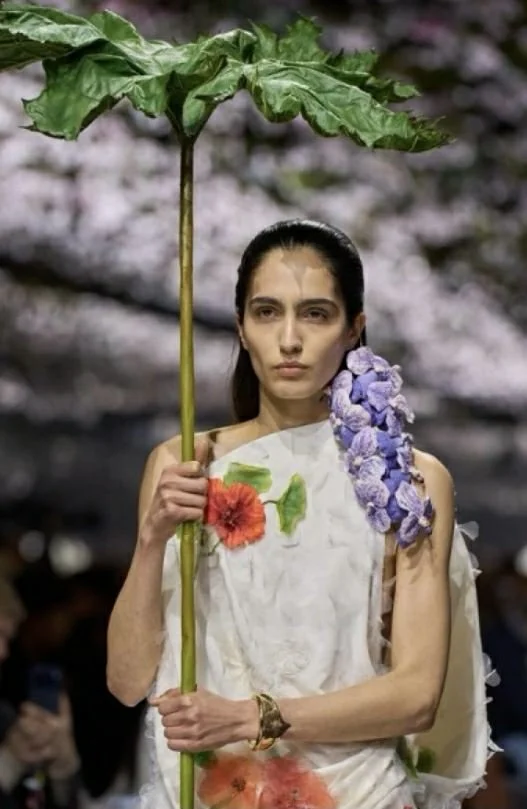
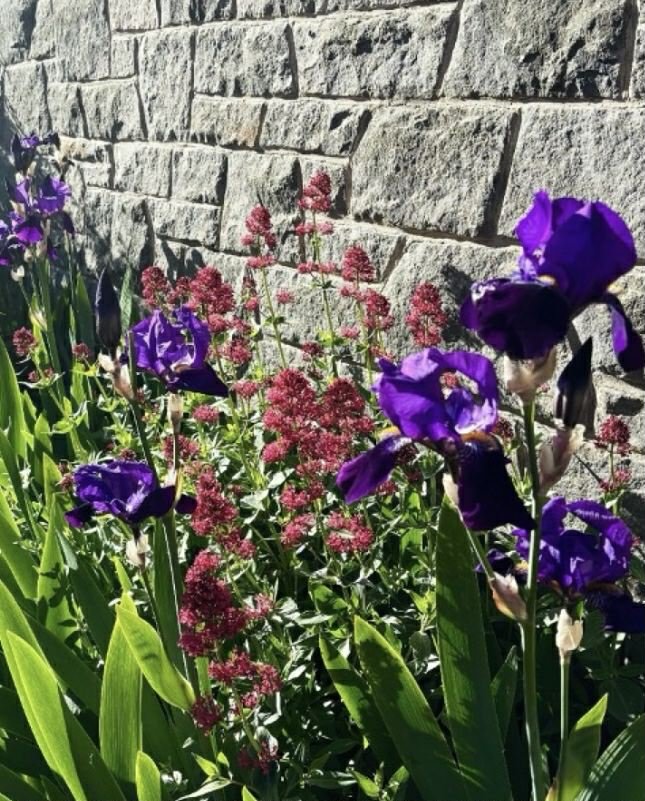
The Dior editorial pairings focus on couture’s dialogue with botanical form. A runway look featuring sculptural floral appliqué is visually echoed in St Andrews Garden photography, where irises and clustered blossoms recreate the same layered colour contrasts and organic structure.
Similarly, Dior’s voluminous floral gown finds its counterpart in the natural spread of pink heather, whose dense texture mirrors the garment’s rounded silhouette and surface movement.
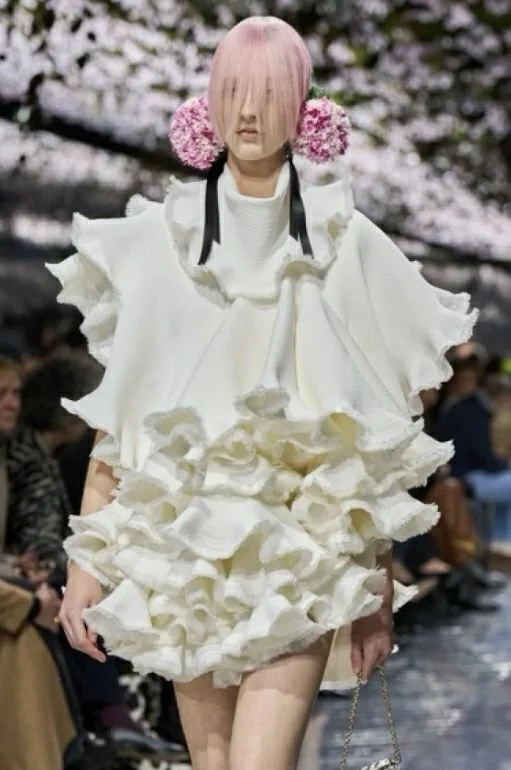
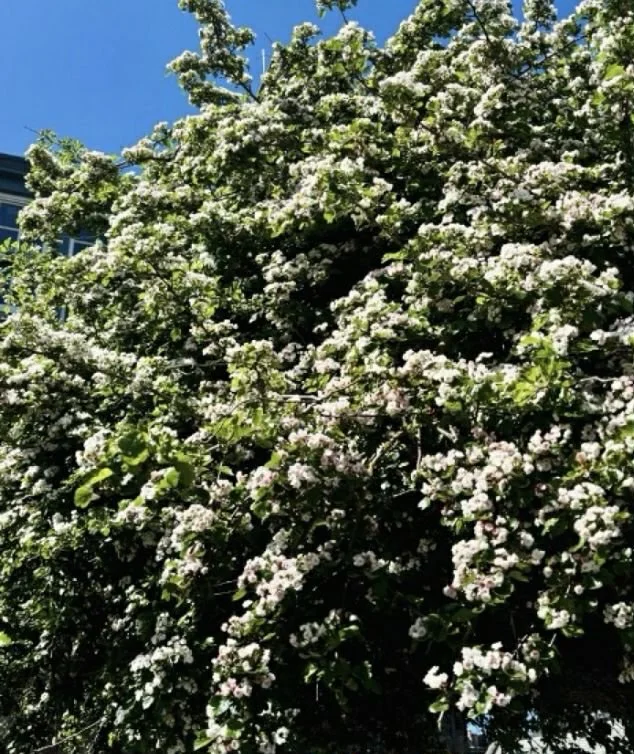
Rather than recreating couture styling, the photographs highlight how the same visual language of scale, texture, and colour already exists within the surrounding landscape.
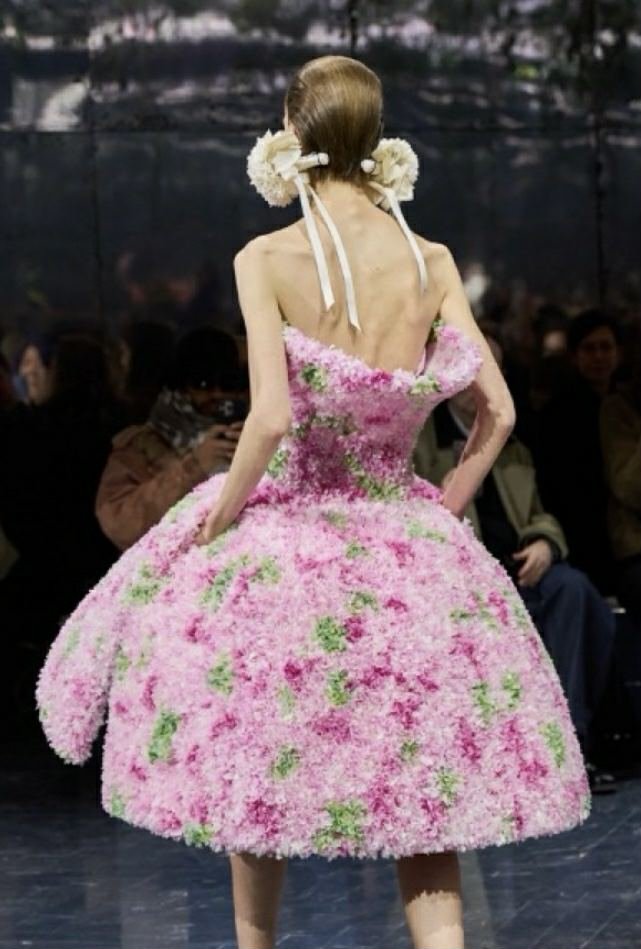

Together, the images suggest that couture influence is not confined to the runway; it quietly reappears in the landscapes surrounding us.
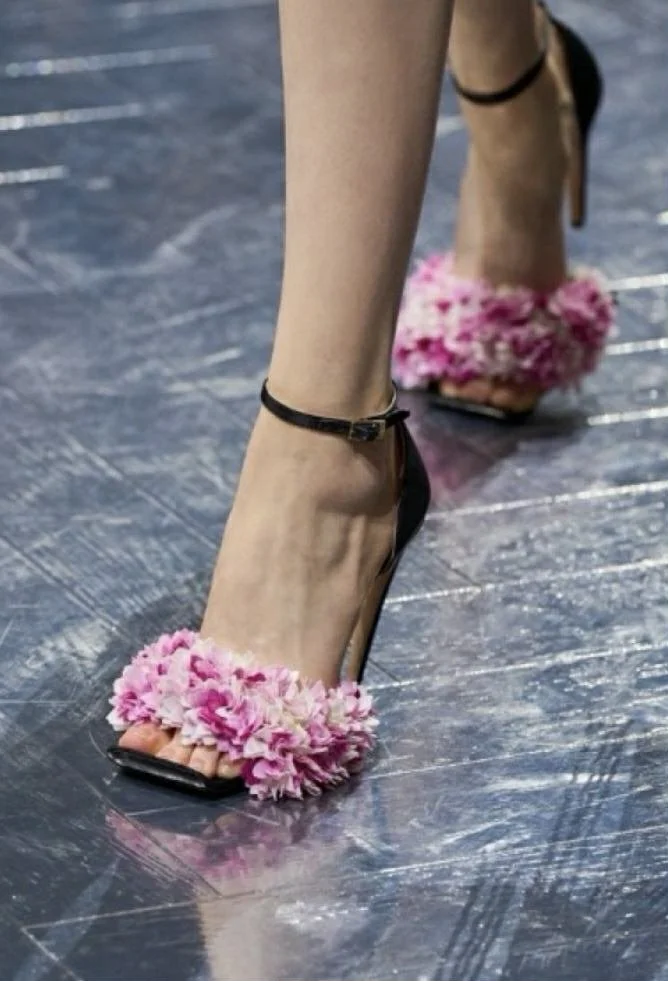
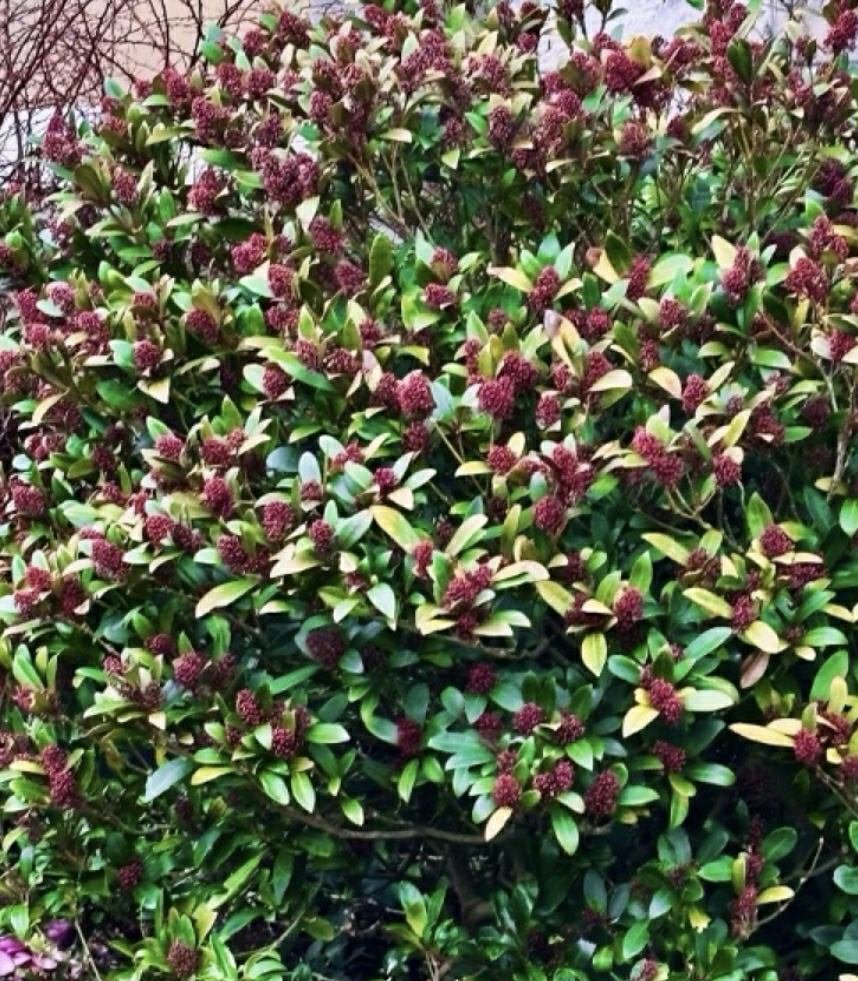
By the time couture reaches St Andrews, it no longer looks like couture. It looks like a neutral coat chosen without hesitation on a cold morning. It looks like a silk scarf tied absentmindedly to a bag. It looks like details that feel intuitive rather than deliberate. Couture begins as performance, but its final destination is always a local interpretation.
Photography by Zeynep Baser and couture images courtesy of Vogue Runway