
Literary Chic: Dressing Like You’ve Read the Book
Seems like the SS2026 has done the weekly reading.
In Vogue’s own words, spotted across the Spring/Summer 2026 runways, “literary chic blends ladylike tailoring with an intellectual edge”.
If you spend enough time wandering through the libraries and cafés of St Andrews, you begin to notice a pattern. Between tote bags and takeaway cappuccinos, books are everywhere. Tucked under arms, slipping out of handbags, occasionally even being read. In a student town, the book is not a prop, (although it performs very well as one). Beyond St Andrews, however, literature has quietly rebranded itself as one of fashion’s most desirable accessories of 2026.
In what often feels like an increasingly post-literate world, this revival feels almost ironic. The Brontës are back, largely thanks to the upcoming adaptation of Wuthering Heights, and suddenly everyone has very strong feelings about windswept moors. Whether they have actually finished the novel is, of course, another matter.
Fashion, unsurprisingly, has been paying close attention. For years, fashion has flirted with the aesthetic of intellect. Tweed blazers, horn-rimmed glasses, the academia-coded scarf draped over the shoulders of someone who has not opened a novel since year 9 English. But in 2026, something shifted. Literature itself entered the wardrobe. Designers are no longer referencing the idea of intellect but engaging with literature directly.
With the great shift in fashion, most fashion houses have appointed new creative directors and possibly the most spoken names have been Blazy’s Chanel and Anderson’s Dior. At Dior, Jonathan Anderson has woven textual references into his collections, drawing on the romance and introspection of canonical works. This is certainly not subtle. Ulysses becomes a book tote. Les Liaisons Dangereuses becomes a silk scarf. (Is available as a book tote too!) One half expects Mrs Dalloway to appear as a trench coat lining by next season.
What makes Anderson’s Dior particularly compelling is not just the references themselves, but his refusal to over-explain them. At a time when fashion arrives with captions, press notes, and ready-made interpretations, meaning is usually handed to us before we have the chance to form it ourselves. Anderson, rather elegantly, declines to do this. The book tote is the personal example for the direction of Anderson’s Dior. Already iconic, it is transformed into something closer to a cultural artefact, embroidered with the covers of classic texts. The gesture is almost aggressively literal. A bag that does not simply carry your belongings, but quietly announces that you might also carry ideas.
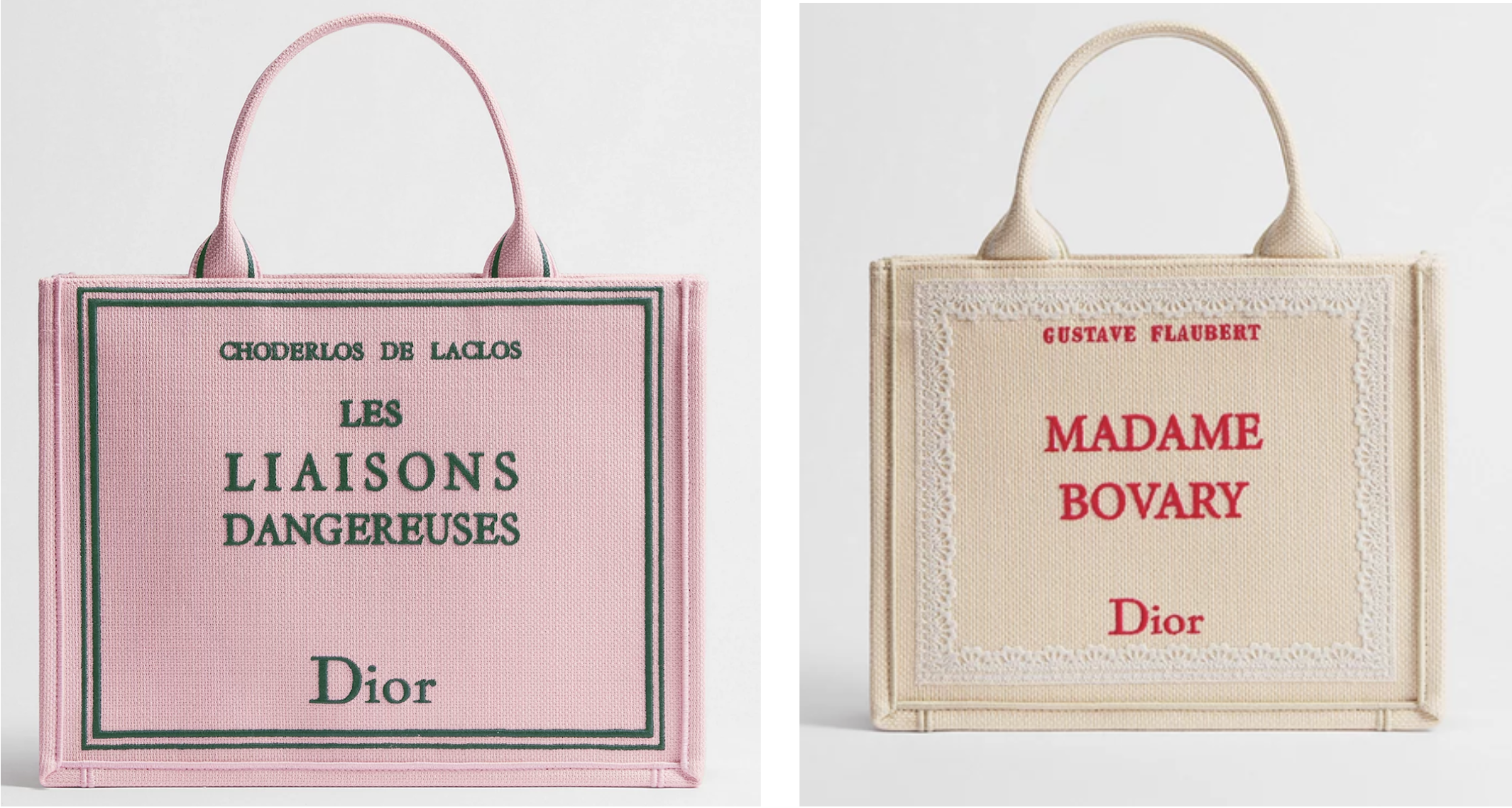
Images Courtesy of Dior.com
In doing so, Anderson disrupts one of fashion media’s favourite pastimes: decoding. We are so used to asking what a collection “means,” who the woman is, what the message might be. Here, there is no neat answer. No singular muse. No tidy narrative. Just fragments, references, and the unsettling possibility that you are meant to think for yourself.
The result is what Vogue has termed “literary chic,” now widely considered the new prep.
An evolution of autumn’s modern prep, the Spring 2026 runways replaced country-club codes with something more cerebral. Pencil skirts instead of trousers, structured blazers instead of barn jackets, soft cardigans layered over crisp button-downs. It is all very polished, but with the faint suggestion that the wearer might correct your pronunciation.
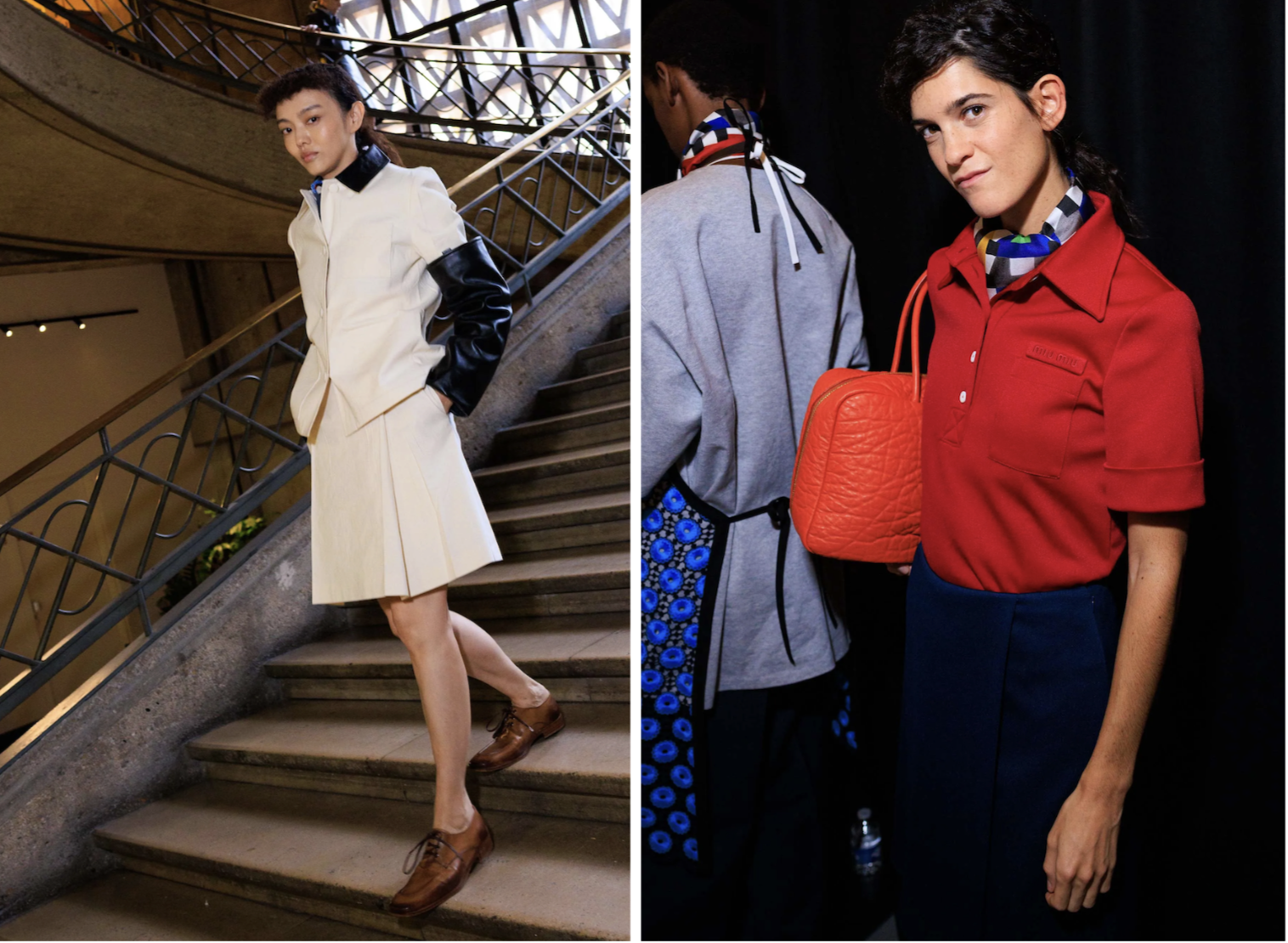
Miu Miu SS26, Images Courtesy of Vogue Runway
In their own ways designers embraced the concept of “literary chic”. Tory Burch delivered collegiate polish with a love letter to pleated skirts. (For me, personally, this was the first time I have browsed the Tory Burch in a very very long time. As a skirt enthusiast, I was very much drawn to the looks.) Miu Miu leaned into playful intellectualism, withMiucca’s signature utilitarian finish. Prada offered an interesting take, with layering and intricate silhouettes, while Bottega Veneta perfected the art of looking quietly more educated than everyone else in the room.
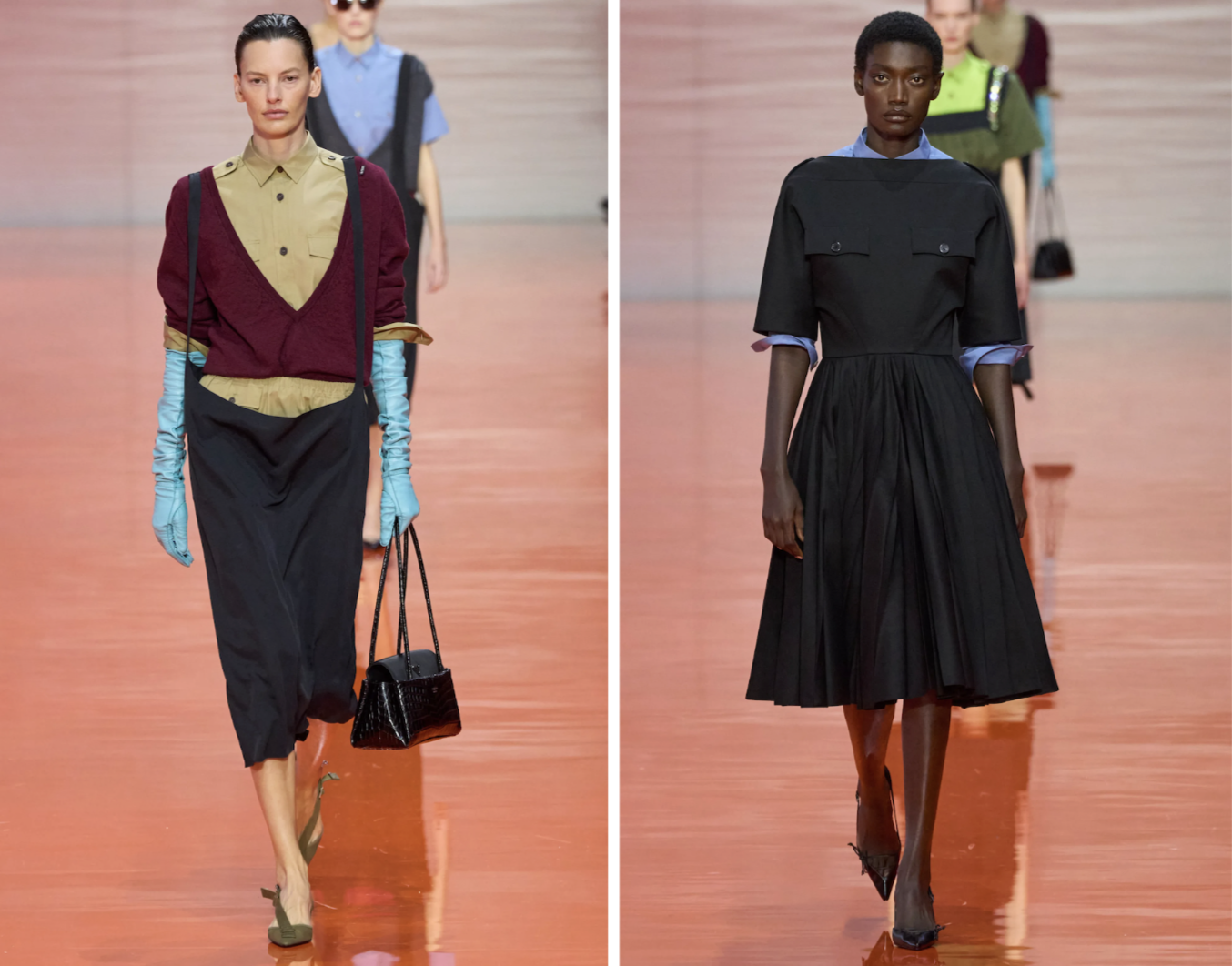
Prada SS26, Courtesy of Vogue Runway
The styling completes the illusion. Oversized sunglasses suggest mysterious authorship. Loosened neckties hint at long afternoons spent “reading,” or at least thinking about reading. Sleeves pushed casually up the forearms convey effort without evidence. It is intellectual, but only just. Perhaps that is precisely the appeal. In an era defined by speed, spectacle, and relentless scrolling, dressing like someone who might spend an afternoon with a novel feels oddly radical. Or at the very least, aesthetically convincing.
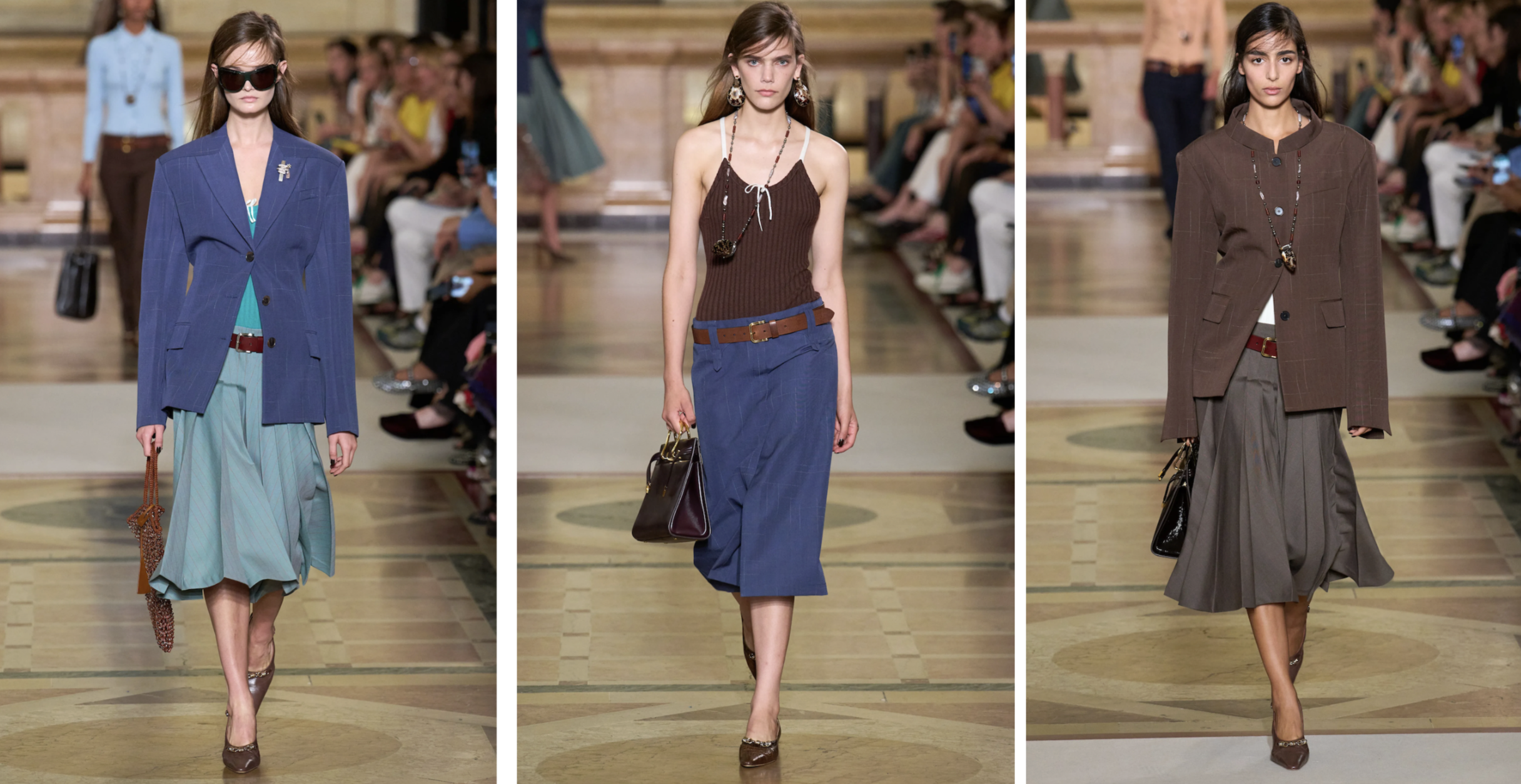
Tory Burch SS26, Courtesy of Vogue Runway
There is something undeniably charming in the suggestion that behind the perfectly tailored blazer sits someone with opinions on the Brontës. Even if those opinions are still in progress.
Fashion is not just performing intelligence rather implying that they are a part of the story, and if, along the way, a few people actually pick up a book, then literary chic may well be the most unexpected success story of the season.
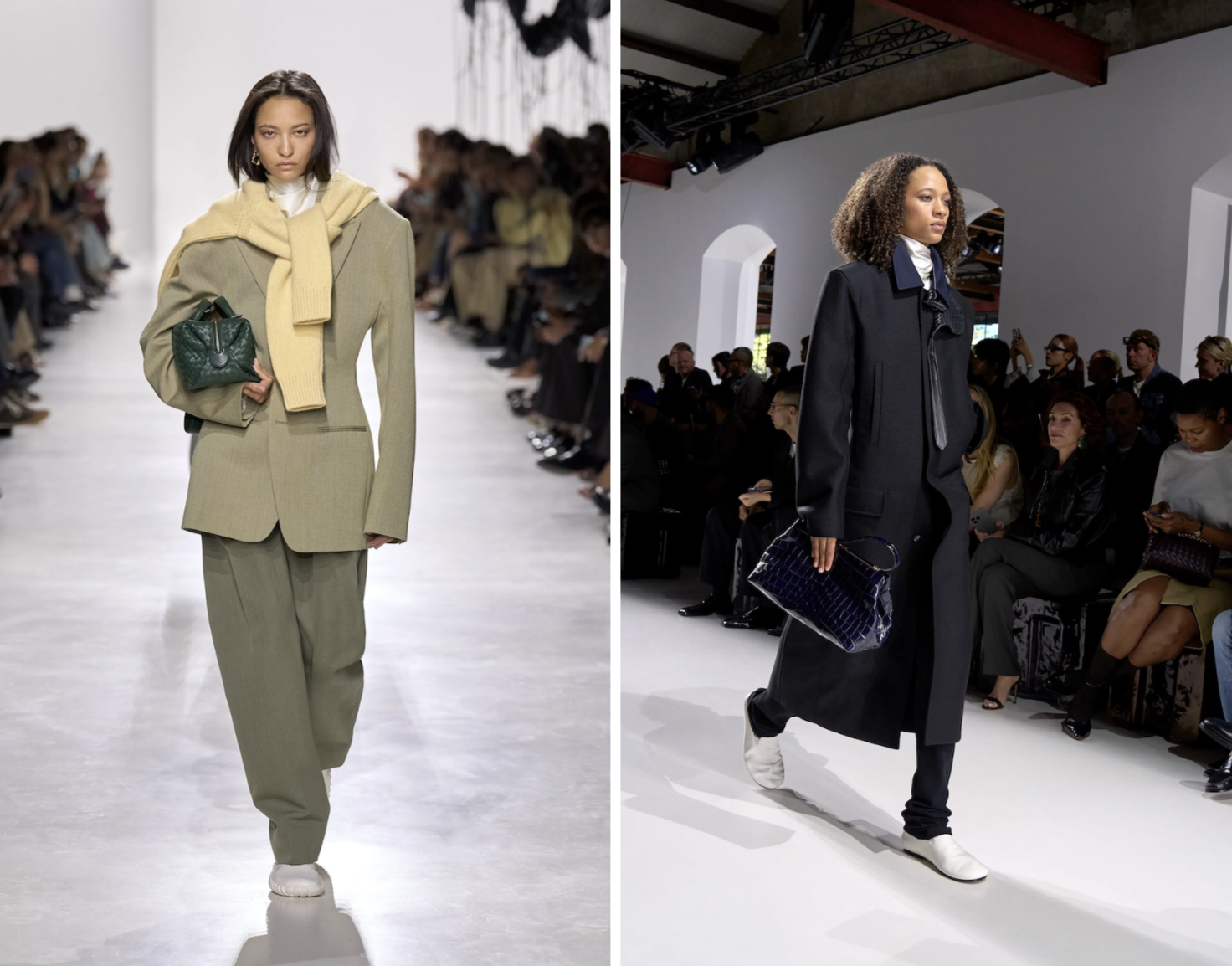
Bottega Veneta SS26, Courtesy of Vogue Runway